Assurance
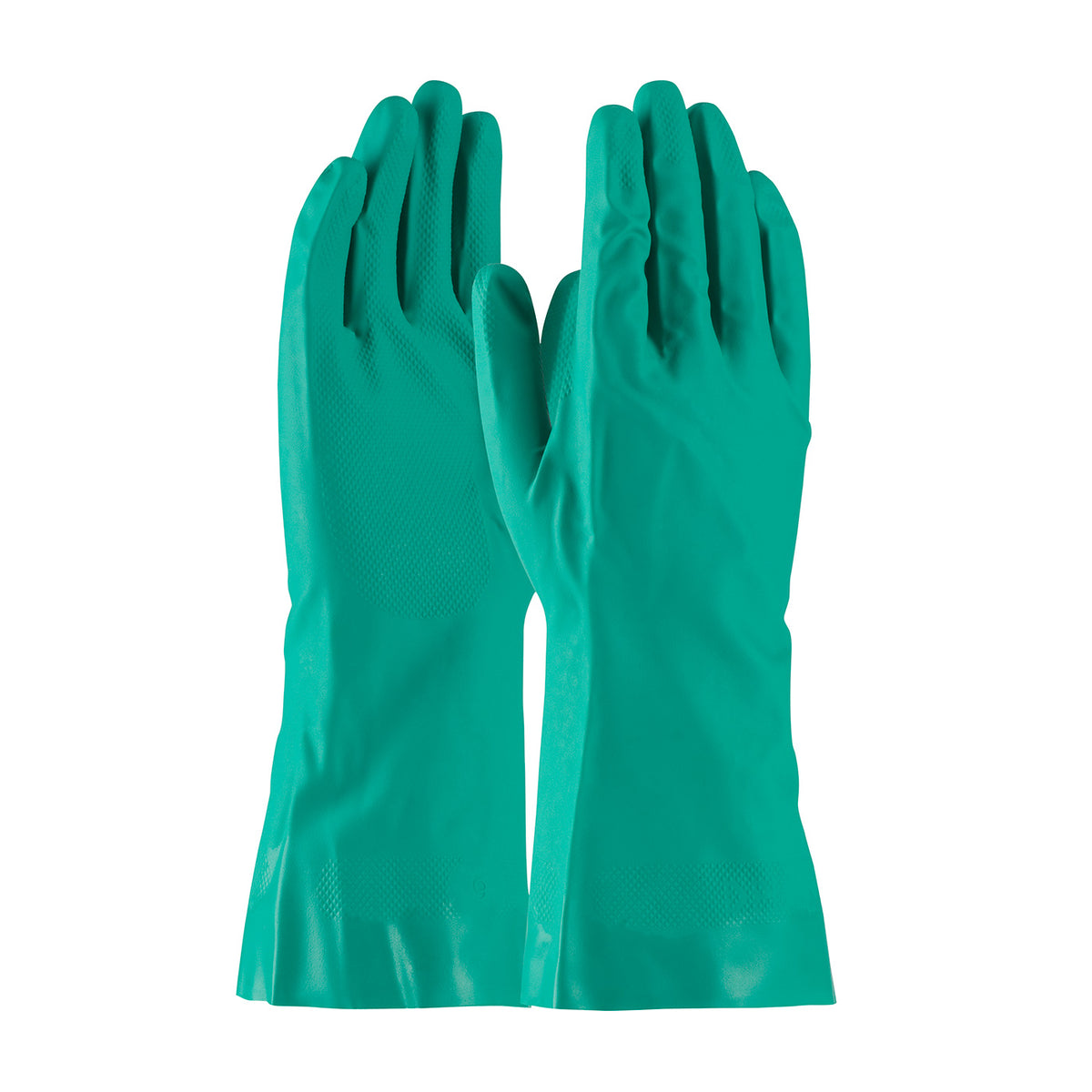
PIP 50-N160G Assurance Flock Lined Raised Diamond Grip Safety Glove (One Dozen)
PIP 50-N160G Assurance Flock Lined Raised Diamond Grip Safety Glove (One Dozen)
SKU:50-N160G/S
Couldn't load pickup availability
Ideal for chemical processing, oil refining and petrochemicals, food processing, aerospace and automotive degreasing, automotive assembly and painting, machining operations, metal fabrication, graphic arts and printing cleanup, furniture manufacturing and electronics.
FEATURES
- Medium weight construction and hand specific design provide real comfort with protection
- Provides flexibility, tactile sensitivity and dexterity sometimes lacking in heavier gauge unsupported nitriles
- Provides the protection from chemical and physical hazards not always found in thinner gauge nitrile disposables
- Flock lining provides increased comfort and ease of donning
- Straight cuff adds additional length to protect the forearm from liquid run-off
- Raised Diamond pattern for an enhanced grip
- Chlorinated to harden and cleanse the surface of the glove
- Complies with FDA food handling requirements 21 CFR, Part 177
- Silicone Free
POLYMER: NITRILE
Nitrile provides good resistance to hydrocarbon derivatives. It is tough and resistant to abrasion, snags and perforation. However, nitrile with a smooth finish is not recommendedin oily conditions, and avoid prolonged contact with ketones and aromatic solvents.
GRIP: RAISED DIAMOND
Diamond patterns provide added grip on wet or dry surfaces, and are commonly used in food handling and processing applications.
LINING: FLOCKED
Flock lining provides increased comfort and ease of donning.
CHEMICAL PERMEATION
The chemical permeation of our product is measured in accordance to European Standard EN 374-3. This measures the resistance of protective gloves against chemicals and microorganisms. Part 3 of the standard determines the level of resistance to permeation by chemicals.
BREAKTHROUGH TIME (BTT)
The number of minutes from initial contact with a test chemical until it is first detected on the inside of the glove.
BREAKTHROUGH TIME - PROTECTION INDEX
Each chemical tested is classified in terms of breakthrough time (performance level 0 to 6).
 EN 388 is a European Standard. Cut Level is determined by the number of cycles it takes a spinning circular blade, that is pulled across the material under a constant weight of 500 grams, to cut the fabric. As the number of cycles increase, so does the glove's ratings.
To attain the EN 374 pictogram shield gloves must pass at least a Level 2 in three chemicals. The chemicals listed are the chemicals that passed for this glove.